| Bilder av High Tatras
Bilder av High Tatras på Panoramio
|
|
|
Kommersielle kategorier High Tatras |
Informasjonskategorier
|
Travel råd og advarsler High Tatras
| Tourism |
Tourism in Slovakia offers natural landscapes, mountains, caves, medieval castles and towns, folk architecture, spas and ski resorts.
More than 1. 6 million people visited Slovakia in 2006, and the most attractive destinations are the capital of Bratislava and the High Tatras. [1] Most visitors come from the Czech Republic (about 26%), Poland (15%) and Germany (11%) |
| Sights |
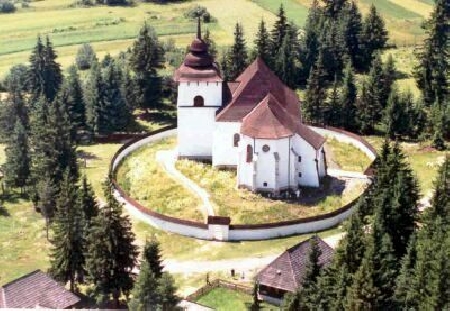
Liptov Village Museum in Pribylina is available to the public since 1991. It was built with a water reservoir Liptovská Mara, in order to protect the most valuable movable and immovable monuments. In addition, wooden folk architecture (rural and old houses, village school, a smithy, belfry, and buildings), there are copies of two most valuable monuments of flooded area.
The early Gothic Church of Our Lady of Liptovská Mara and the Gothic-Renaissance chateau of Parížkovce, the oldest yeoman seat in Liptov. The museum has its own zoo exhibition. It focuses on domestic animals and poultry. Its specialty is breeding hucul horses with the possibility of riding for the visitors. |
| People |
|
| Climate |
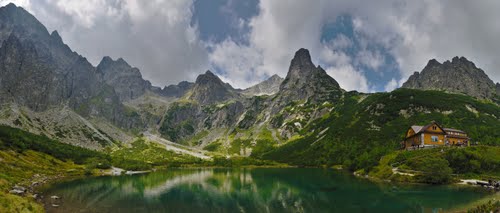
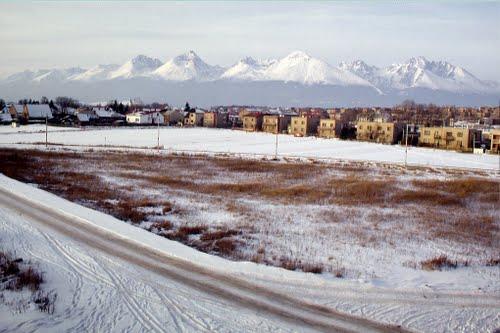
The climate is mostly mountainous and alpine, thus cold and moist, and is heavily influenced by mountainous terrain. Snow covers the mountain from 180 (in valleys) to 250 (in most areas) days of the year. Here and there and in particular on the northern shady slopes and gutters are under the snow all year round. At the upper layer the snow cover reaches 100-150 cm and the rugged landscape causes frequent landslides.
Rainfalls occur due to prevailing westerly winds on the western and northern slopes. Windy weather is typical for the Tatras (up to 300 days per year). On the south side there are often „falling winds“ that cause refutings and broad fields. Tourists have to count with its sudden changes, especially when the output transitions to peaks or valleys are long, usually lasting 8-10 hours. The average annual temperature is about 5 °C, 15 °C in July. The best time for hiking is in the autumn when the weather is stable due to lower temperatures and there is also an excellent visibility at that time. |
|