| Bilder av Nizjnij Novgorod
Bilder av Nizjnij Novgorod på Panoramio
|
|
|
Kommersielle kategorier Nizjnij Novgorod |
Informasjonskategorier
|
Travel råd og advarsler Nizjnij Novgorod
| Tourism |
Nizhny Novogorod is divided by the Oka River into two distinct parts. The Upper City (Russian: Нагорная часть, Nagornaya Chast) is located on the hilly eastern (right) bank of the Oka. It includes three of the eight city districts into which the city is administratively divided:
- Nizhegorodsky (the historical and administrative center of the city); Prioksky; Sovetsky.
The Lower City (Russian: Заречная часть, Zarechnaya Chast) occupies the low (western) side of the Oka, and includes five city districts:
- Kanavinsky (the site of the Nizhny Novgorod Fair and the location of the main train station); Moskovsky (home of the Sokol Aircraft Plant and its airfield); Sormovsky (where Krasnoye Sormovo and the Volga Shipyard are located); Avtozavodsky (built around the GAZ automotive plants); Leninsky.
All of the today's lower city was annexed to Nizhny Novgorod in 1929-1931.
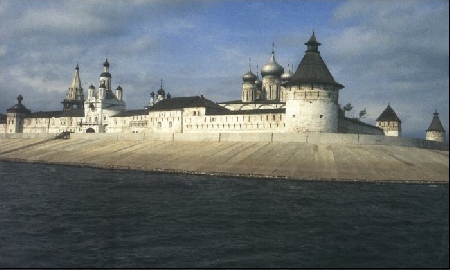
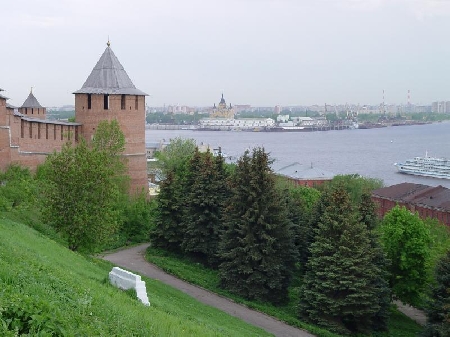
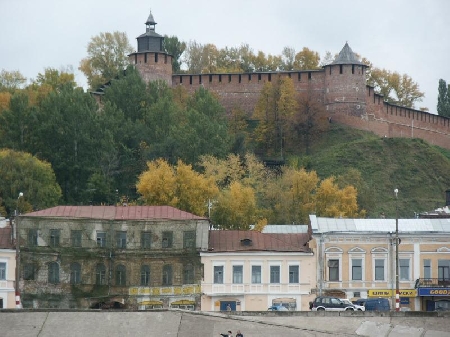
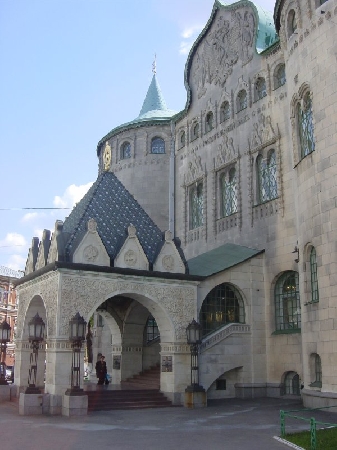
Much of the city downtown is built in the Russian Revival and Stalin Empire styles. The dominating feature of the city skyline is the grand Kremlin (1500-11), with its red-brick towers. After Bolshevik devastation, the only ancient edifice left within the kremlin walls is the tent-like Archangel Cathedral (1624-31), first built in stone in the 13th century.
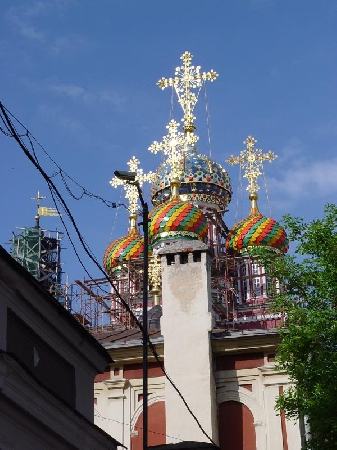
Other notable landmarks are the two great medieval abbeys. The Monastery of the Caves features the austere five-domed cathedral (1632) and two rare churches surmounted by tent roofs, dating from the 1640s. The Annunciation monastery, likewise surrounded by strong walls, has another five-domed cathedral (1649) and the Assumption church (1678). The only private house preserved from that epoch formerly belonged to the merchant Pushnikov. |
| Cultura |
|
|