| Byer Estland
|
|
| Landinformasjon |
landskode: EE
kontinentet: Europa
hovedstad: Tallinn
språk: Estisk
EU-medlemskap: ja
NATO-medlemskap: ja
GSM: 900/1800/3G
GPS: 59 00 N, 26 00 E
elektrisitet: 230V/50Hz
valuta:
EU Euro: EUR
1EUR = 1.2656 USD
Telefonkode:
+372-6
|
Travel råd og advarsler Estland
| Tourism |
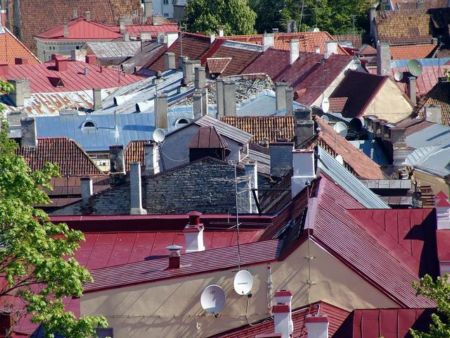
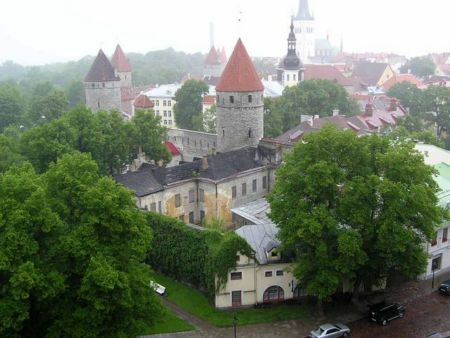
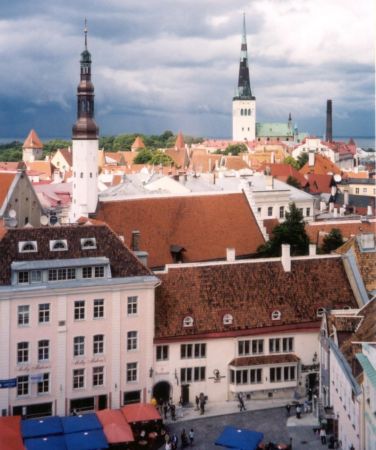
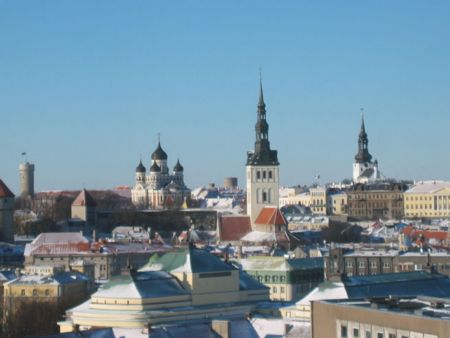
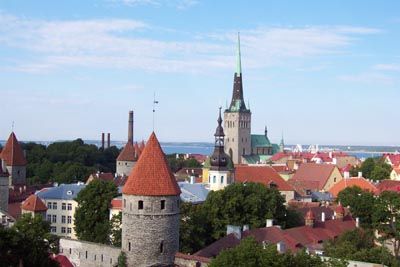
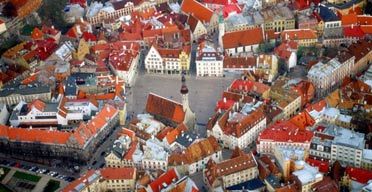
There is no doubt that Tallinn is the biggest centre for tourists in Estonia. The historic Old Town with its numerous sights is one of the most impressive medieval monuments in Europe. At the same time, the growing economic metropolis is the only traffic junction in the country and provides to its visitors numerous international and regional transport connections. |
| Culture |
Estonian culture combines an indigenous heritage, represented by the country's Uralic national language Estonian, with Nordic cultural aspects. Due to its history and geography, Estonia's culture has been influenced by the traditions of the adjacent area's various Finnic, Baltic, Slavic and Germanic peoples as well as the cultural developments in the former dominant powers Sweden and Russia. Traditionally, Estonia has been seen as an area of rivalry between western and eastern Europe on many levels. An example of this geopolitical legacy is an exceptional combination of nationally recognized Christian traditions: a western Protestant and an eastern Orthodox Church. Like the mainstream culture in the other Nordic countries, Estonian culture can be seen to build upon the ascetic environmental realities and traditional livelihoods, a heritage of comparatively widespread egalitarianism out of practical reasons (see e. g. : Everyman's right and universal suffrage), and the ideals of closeness to nature and self-sufficiency. |
| Climate |
EEstonia lies in the northern part of the temperate climate zone and in the transition zone between maritime and continental climate. Because Estonia (and all of Northern Europe) is continuously warmed by maritime air influenced by the heat content of the northern Atlantic Ocean, it has a milder climate despite its northern latitude. The Baltic Sea causes differences between the climate of coastal and inland areas. Estonia has four seasons of near-equal length. Average temperatures range from 16. 3 °C (61. 3 °F) on the Baltic islands to 18. 1 °C (64. 6 °F) inland in July, the warmest month, and from −3. 5 °C (25. 7 °F) on the Baltic islands to −7. 6 °C (18. 3 °F) inland in February, the coldest month. |
| Cuisine |
Traditional Estonian cuisine has substantially been based on meat and potatoes, and on fish in coastal and lakeside areas, but is influenced by many other cuisines by now. In the present day it includes a variety of international foods and dishes, with a number of contributions from the traditions of nearby countries. German, Scandinavian, Russian and other influences have played their part. The most typical foods in Estonia have been rye bread, pork, potatoes and dairy products. Estonian eating habits have historically been closely linked to the seasons. In terms of staples, Estonia belongs firmly to the beer, vodka, rye bread and pork "belt" of Europe. |
| Language |
Estonian (eesti keel; pronounced [ˈeːsti ˈkeːl] ( listen)) is the official language of Estonia, spoken by about 1. 1 million people in Estonia and tens of thousands in various émigré communities. It is a Uralic language and is closely related to Finnish.
One distinctive feature that has caused a great amount of interest in linguists is what is traditionally seen as three degrees of phoneme length: short, long, and "overlong", such that /toto/, /toˑto/ and /toːto/ are distinct. In actuality, the distinction is not purely in the phoneme length, and the underlying phonological mechanism is still disputed. [citation needed] |
| Shopping |
In general, prices in Estonia are cheaper than in many other EU countries, so it’s a great shopping destination.
Finnish people certainly think so and every day many Finns take the ferry from Helsinki to come shopping in Tallinn.
Larger shops and shopping centres are usually open 7 days a week, smaller ones are closed on Sundays. Most credit and debit cards are widely accepted.
Many tourists enjoy hunting, finding and buying bargain antique furniture and icons; books; jewellery; alcohol; textile and wooden handicraft items.
Most shopping centres have free parking, wireless internet access, ATMs, a currency exchange booth or bank and places to eat & drink. Some of the shopping centres offer low cost playrooms, for the kids, with adult supervision so you can shop in peace. |
| Currency |
|
|