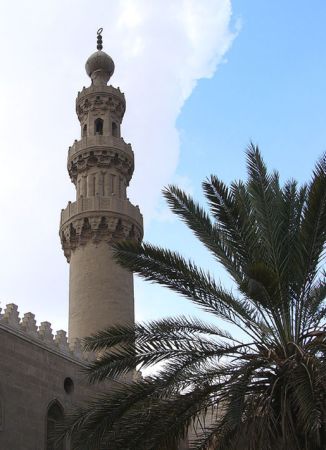
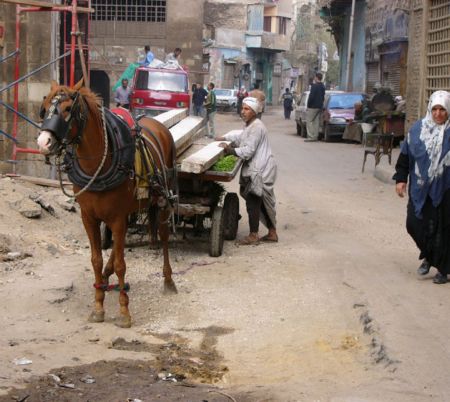
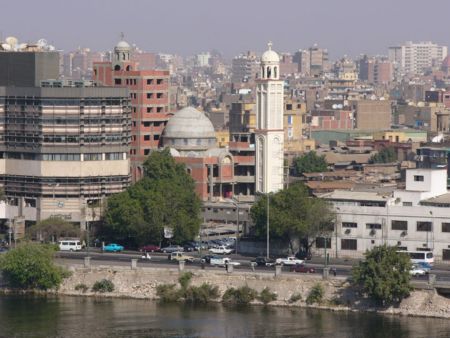
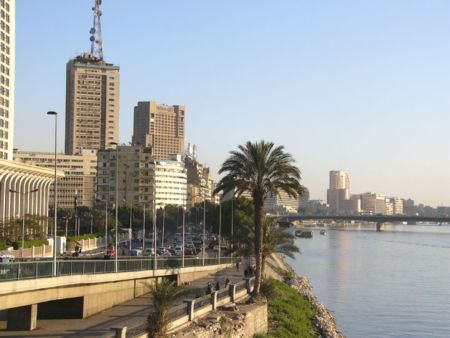
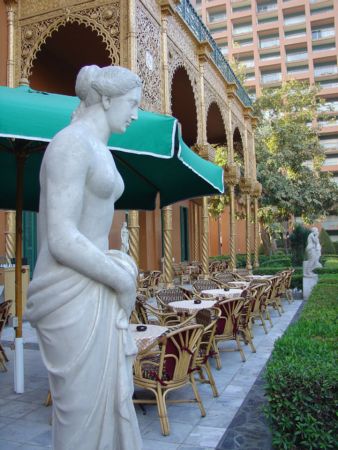
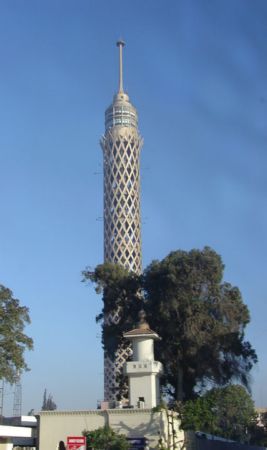
Tourism is one of the most important sectors in Egypt's economy. More than 12. 8 million tourists visited Egypt in 2008, providing revenues of nearly $11 billion. The sector employs about 12 percent of Egypt's workforce.
Culture
Cuisine
Egyptian cuisine consists of the local culinary traditions of Egypt. Egyptian cuisine makes heavy use of legumes and vegetables, as Egypt's rich Nile Valley and Delta produce large quantities of high-quality crops.
Climate
The Egyptian summer is hot and dry in most of the country, and humid in the Delta and along the Mediterranean Coast. In recent years the humidity has spread to Cairo, and the city swelters in August! Winter is mild with some rain, but usually it is bright, sunny days with cold nights.
Language
Egyptian is the oldest known indigenous language of Egypt and a branch of the Afroasiatic language family. Written records of the Egyptian language have been dated from about 3400 BC, making it one of the oldest recorded languages known. Egyptian was spoken until the late 17th century AD in the form of Coptic. The national language of modern-day Egypt is Egyptian Arabic, which gradually replaced Coptic as the language of daily life in the centuries after the Muslim conquest of Egypt. Coptic is still used as the liturgical language of the Coptic Church. It has a handful of fluent speakers today.
Currency
The Egyptian Pound (Arabic: الجنيه المصرى al-Gunayh al-Miṣrī ; Egyptian Arabic el-Genēh el-Maṣri IPA: [elɡeˈneːh elˈmɑsˤɾi]) (sign: E£ or ج. م; code: EGP) is the currency of Egypt. It is divided into 100 Qirsh (قروش [ʔoˈɾuːʃ, ʔeˈɾuːʃ], singular قرش [ʔeɾʃ]; Turkish: Kuruş; English: piastre[2]), or 1000 Milliemes (Arabic: ملليم [mælˈliːm]; French: Millième).
The ISO 4217 code is EGP. Locally, the abbreviation LE or L. E. , which stands for livre égyptienne (French for Egyptian pound) is frequently used. E£ and £E are rarely used. The name Gineih is derived from the Guinea coin, which had almost the same value of 100 Qirsh at the end of the 19th century.