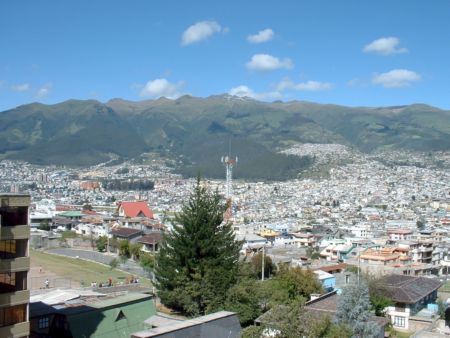
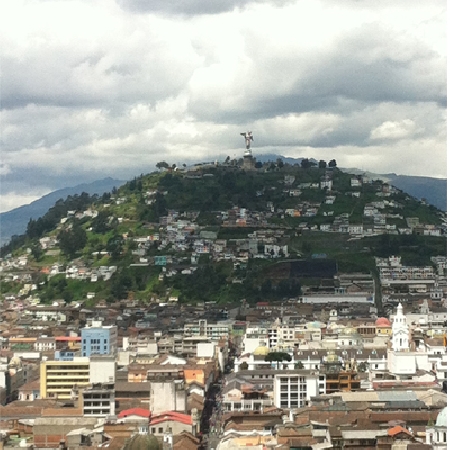
Ecuador is a small country that makes up for its size with an array of indigenous cultures, colonial architecture, scenic landscape and dense rainforests. Climbing and trekking are popular but strenuous whereas the tropical beaches provide relaxation opportunities. The Galápagos Islands is a national park with excellent wildlife viewing and chances to scuba dive with the abundant marine life.
Language
The predominant and official language of Ecuador is Spanish, in addition to Northern Quechua and other pre-colonial American languages, which are spoken by 2, 300, 000 (Adelaar 1991). Ethnologue lists 24 languages of Ecuador
Climate
The climate of Ecuador varies by region, due to differences in altitude and proximity to the equator.
The coastal lowlands to the west of Ecuador are typically warm with temperatures in the region of 25 °C (77 °F). Coastal areas are affected by ocean currents and between January and April are hot and rainy.
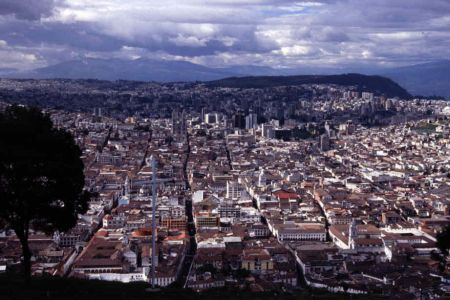
The weather in Quito is consistent to that of a subtropical highland climate. The city has a fairly constant cool climate due to its elevation and proximity to the equator. The average temperature during the day is 66 °F (18. 9 °C), which generally falls to an average of 50 °F (10 °C) at night. The average temperature annually is 64 °F (17. 8 °C) There are only really two obvious seasons in the city: dry and wet. The dry season (summer) runs from June to September and the wet season (winter) is from October to May.