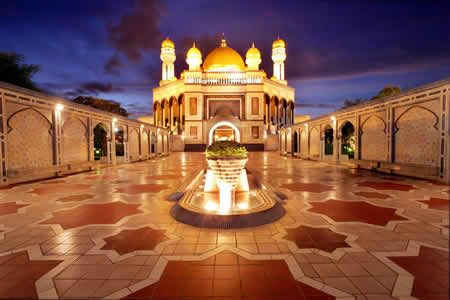
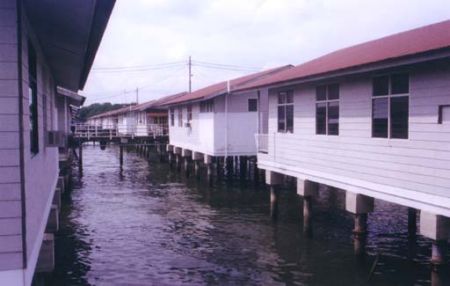
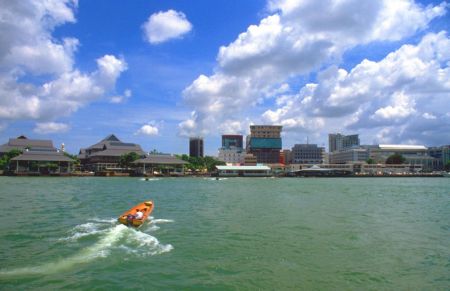
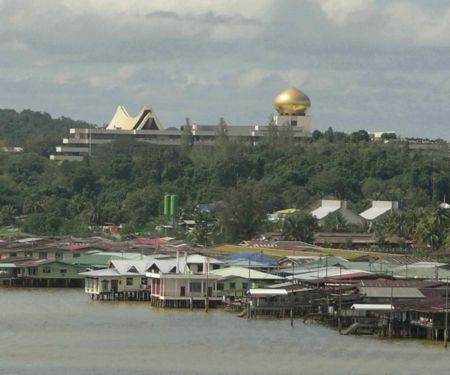
Brunei offers its visitors a wide choice of hotels and other forms of accommodation. Tourism industry of Brunei is thus becoming a major growth factor for the economy of the country.
Language
There are a multitude of languages spoken in Brunei. The official language of the state of Brunei is Melayu Brunei. This came into force on 29 September 1959, with the signing of Brunei 1959 Constitution.
English is also widely used as a business and working language. It is also the language of instruction in secondary and tertiary education. Other languages spoken in Brunei include the Chinese, Indian and Native languages spoken by the minority ethnic groups.
Food and drink
Climate
Brunei's climate is hot and humid. Average annual rainfall is about 2500mm along the coast and over 4000mm in the jungle-cloaked hills of the interior. The wettest months are October, November and December, when average rainfall is over 300mm, while the driest are February and March, when average rainfall is about 130mm. November has the most rainy days, while February and March have the fewest.
Temperatures are amazingly constant. The average daily highs ranges from 30°C in December and January to 32°C from April to August. The average overnight low stays in an even narrower range, from 22°C to 23°C, all year long.
Currency
The ringgit Brunei (Malay) or the Brunei dollar (English, currency code: BND), has been the currency of the Sultanate of Brunei since 1967. It is normally abbreviated with the dollar sign $, or alternatively B$ to distinguish it from other dollar-dominated currencies, It is divided into 100 sen (Malay) or cents (English).
The Brunei dollar is managed together with the Singapore dollar at a 1:1 ratio by Monetary Authority of Singapore (MAS). (Singapore is one of Brunei's major trading partners. )